
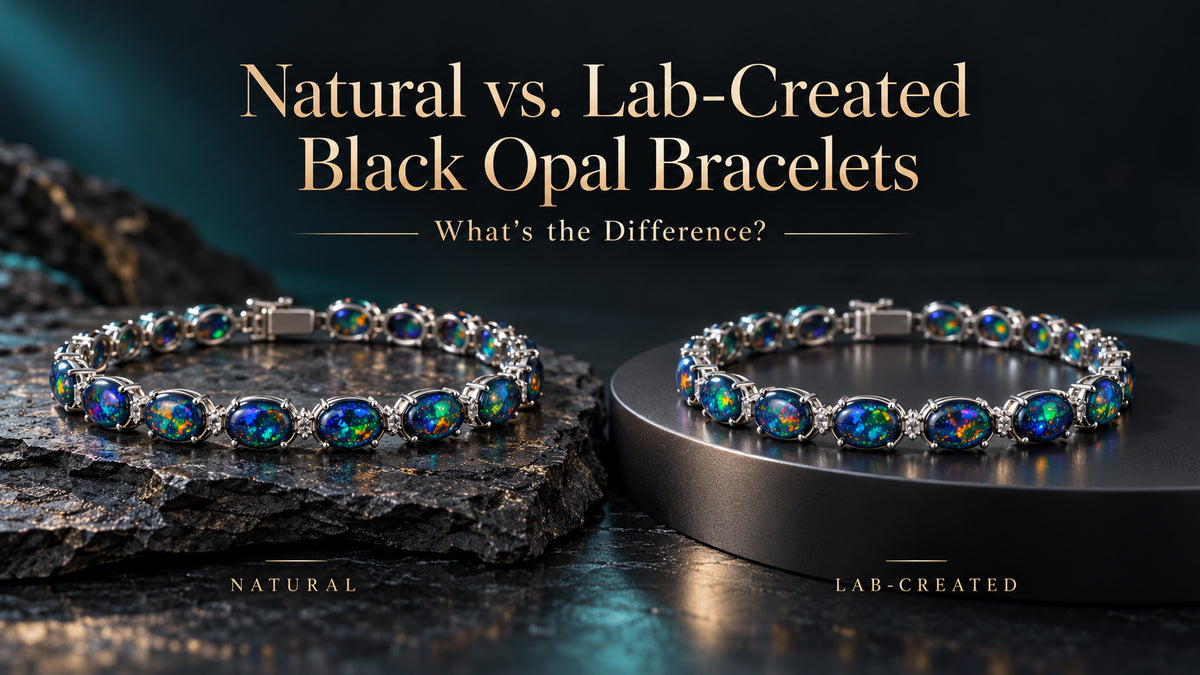
Natural vs. Lab-Created Black Opal Bracelets: What’s the Difference?
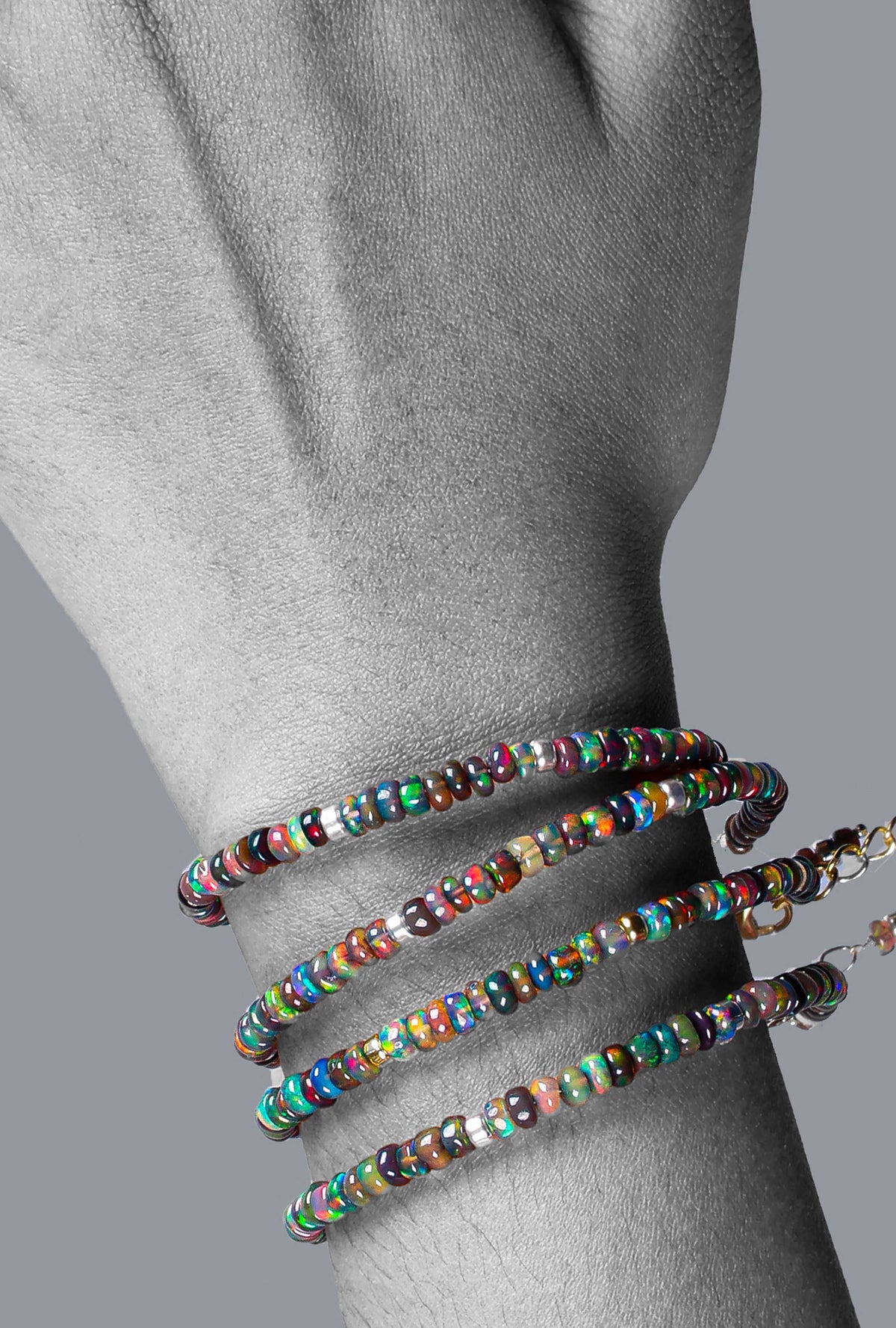
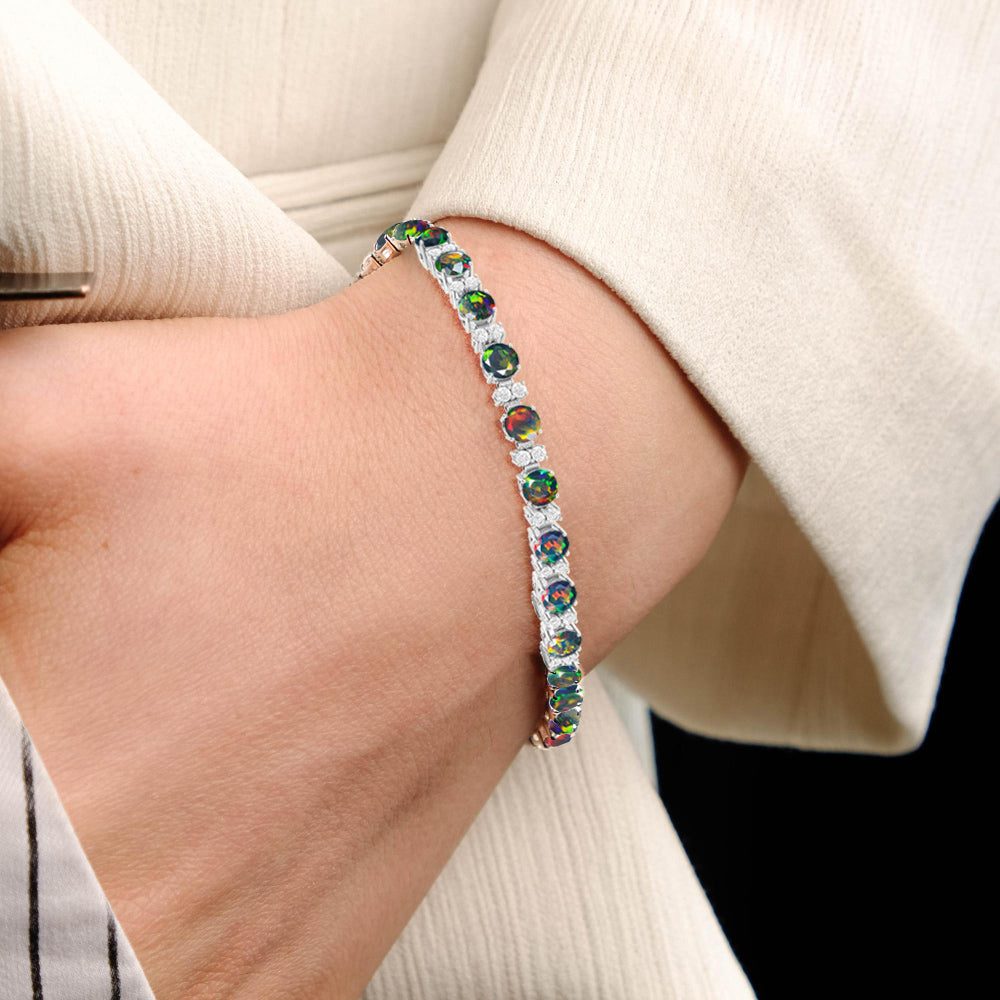
A black opal bracelet brings together a dark background and flashes of color that catch the light as your wrist moves. When shopping for one, you may find both natural and lab-created options with similar appearances. Understanding what separates them helps you choose a piece that suits your taste, budget, and expectations.
The main difference is origin: natural opal forms in the earth, while lab-created opal is manufactured. However, the stone’s identity, any treatments, and the bracelet’s craftsmanship also deserve attention.
What Is a Natural Black Opal Bracelet?
A natural black opal bracelet features opals formed through natural geological processes. Opal develops when silica-bearing water deposits silica in underground spaces. In precious opal, the internal arrangement of tiny silica spheres produces the shifting rainbow effect known as play-of-color.
Black opal has a black or dark background against which these colors appear. The word “black” describes the background, rather than suggesting that the entire gemstone is a solid black color.
For buyers who enjoy natural gemstones, the appeal lies in finding a particular combination of color, pattern, and character. Examine the actual bracelet carefully: its appearance matters more than an attractive product name.
What Is a Lab-Created Black Opal Bracelet?
A lab-created black opal bracelet uses manufactured opal instead of mined material. Synthetic opal is produced to have essentially the same chemical, physical, and optical properties as its natural counterpart. It is different from an imitation that simply resembles opal.
This distinction matters because glass and plastic can also be used to imitate the gemstone. A listing that says “opal-like” or “simulated opal” should not automatically be interpreted as genuine synthetic opal. GIA identifies synthetic opal and glass or plastic imitations as separate categories.
Before purchasing, ask the seller to identify the material clearly. “Lab-created” should provide useful information about the stone, rather than leave you guessing about its composition.
Natural vs. Lab-Created: What Should You Compare?
| Feature | Natural black opal bracelet | Lab-created black opal bracelet |
|---|---|---|
| Origin | Opal formed naturally in the earth | Opal manufactured under controlled conditions |
| Main appeal | Natural origin and individual gemstone character | Manufactured opal’s appearance and design possibilities |
| Disclosure to request | Natural identity and any treatments | Exact material identity and any treatments |
| Quality assessment | Examine color, pattern, condition, and craftsmanship | Examine color, pattern, condition, and craftsmanship |
| Verification | An independent gemological report can help establish identity | An independent gemological report can help establish identity |
An identification report can distinguish natural from laboratory-grown material and identify detectable treatments. Photographs and marketing descriptions are not substitutes for that assessment.
What Does “Black Fire Opal Bracelet” Mean?
If you are searching for a black fire opal bracelet, pay particular attention to the seller’s description.
In gemological terminology, black opal and fire opal are different categories. Black opal has a dark background with play-of-color. Fire opal typically has a yellow, orange, red, or brown bodycolor and does not always display play-of-color.
Do not assume that the phrase “black fire opal” establishes a stone’s identity. Ask whether “fire” describes its colorful flashes and whether the material is natural, synthetic, treated, or an imitation.
That clarification lets you compare bracelets based on what they contain.
Does Natural Mean Untreated?
Natural origin and treatment status are separate questions. Opals can undergo treatments, including smoke or sugar treatment and impregnation with substances such as oil, wax, or plastic. A natural stone may therefore have an altered appearance.
When reviewing a bracelet, ask:
-
Is the opal natural or lab-created?
-
Has its color or appearance been treated?
-
What materials make up the finished stone?
-
Are there specific care instructions?
-
Is supporting identification available?
Clear answers help you understand the product and compare it fairly with other options.
What Affects the Bracelet’s Value?
Avoid judging a black opal bracelet by its origin alone. GIA identifies color, pattern, and clarity as key opal quality factors, with cutting also influencing appearance. Natural origin does not automatically make every stone equally desirable.
For the finished bracelet, also compare the metal, setting, clasp, fit, and workmanship. Check whether the listed metal is solid or plated, and request photographs or a video of the actual piece.
Set a budget before browsing, then decide how much importance you place on natural origin, visual appeal, and construction. This makes it easier to choose without relying on labels such as “premium” or “luxury.”
How to Care for Your Opal Bracelet
Opal requires careful wear. It measures approximately 5–6.5 on the Mohs hardness scale and can scratch or break. High heat and sudden temperature changes can also cause damage.
To protect your bracelet:
-
Remove it before exercise, cleaning, or activities that could knock the stones.
-
Store it separately from jewelry that could scratch it.
-
Avoid ultrasonic and steam cleaners.
-
Follow care instructions specific to its material, treatments, and construction.
For opal, GIA recommends warm, soapy water for cleaning. Ask the jeweler how to apply that guidance to the complete bracelet, particularly if it contains adhesives or other materials.
Choosing Your Bracelet
Choose a natural black opal bracelet if natural origin is an important part of its appeal to you. Consider a clearly identified lab-created option if you enjoy the appearance and the finished design meets your expectations.
Whether a listing says black opal bracelet or black fire opal bracelet, look for accurate material descriptions, treatment disclosure, and thoughtful craftsmanship. The right piece should be one you love wearing—and understand before you buy.